

Get to Know BrookE’S story
Brooke’s story shows how Medicaid, SNAP, and Social Security make independence possible for people living with chronic illness.

Brooke after she had been released from the Madonna Rehabilitation Hospital in July 2018.

Brooke holds devices she used to help monitor and manage her diabetes.

Brooke takes a selfie at a Royals baseball game in 2023, which she had to leave early after beginning to pass out due to low blood pressure.
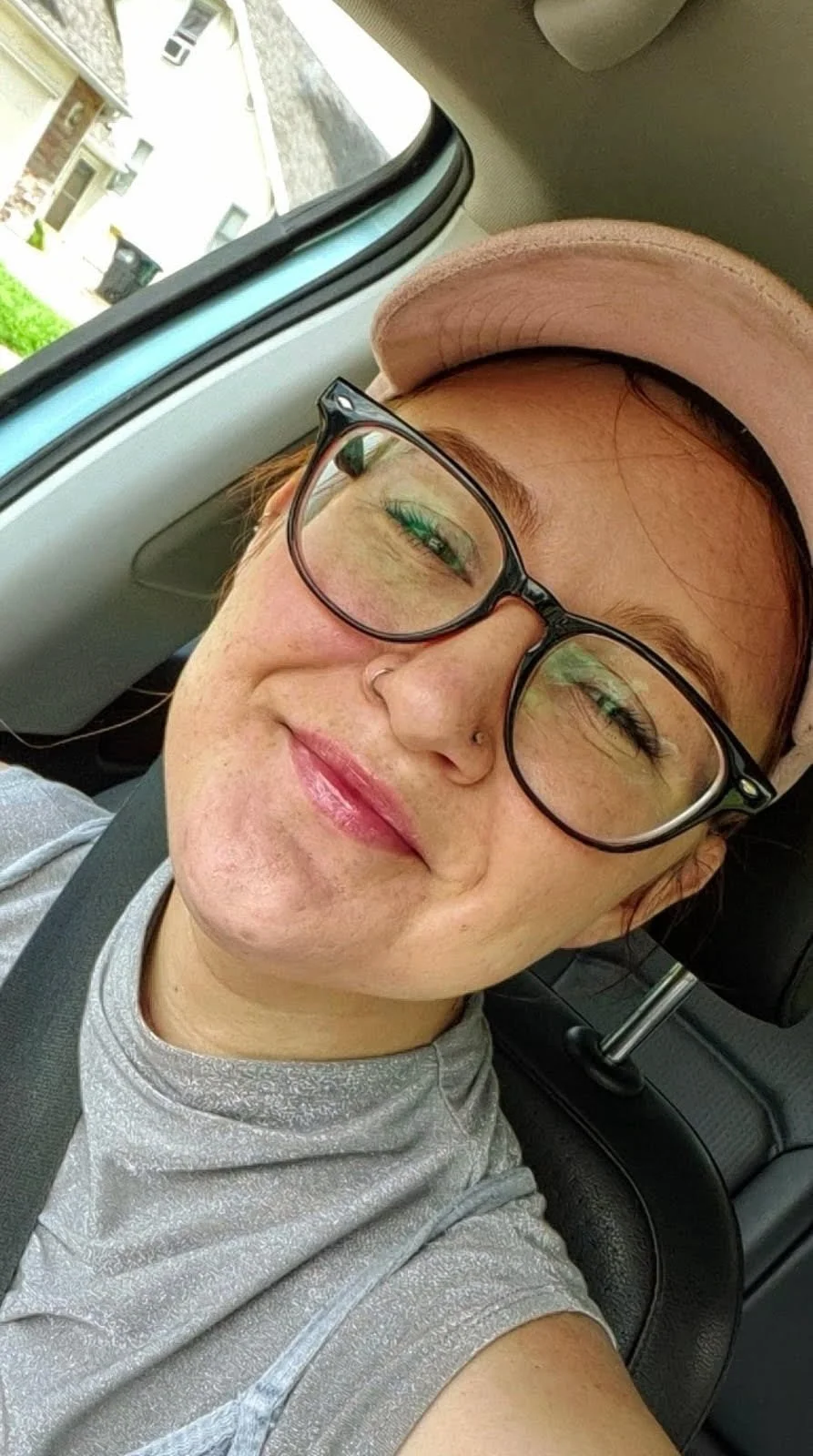
Brooke takes a selfie while managing the health challenges that have shaped much of her adult life.
Brooke has been chronically ill for as long as she can remember. She has a story to share.
During her adolescence, Brooke was seeing specialists and spending considerable time at the hospital. She worried about her family’s ability to afford her healthcare, including a one night hospital stay that left them with a $27,000 bill.
Brooke’s medical history quickly became long for a person her age. Liver disease, PCOS, POTS, neuropathy, thyroid cancer, and type 1 diabetes are some of the conditions she has fought over the last 20 years.
“Hospital visits were frequent as we tried to discover what was going on, and I had the fear of a life consumed by medical debt that I could never hope to pay off.”
At age 20, Brooke had an extreme nervous system attack and a stroke-like event, leading to months of excruciating pain. She lost oxygen to her spine and woke up unable to walk, talk, use her hands, or do daily activities.
“I was in a rehabilitation center that cost $10,000 daily due to the intensive care I needed,” Brooke said. “This was when I decided to join Medicaid as there was no possible way for this to be reasonably paid by us alone.”
Brooke said it was not easy to be approved or stay approved, but being on Medicaid allowed her to seek the care she needed without the fear of not being able to afford it. This meant she didn’t have to wait until it was dire to go to the emergency room, and she was able to see the specialists she needed in order to prevent further medical emergencies. At the same time, Brooke began receiving SNAP benefits. She was then able to purchase food that fit her specialized diet and helped her manage her health.
“The knowledge that I no longer had to choose between life saving medications, which may not be fully covered by insurance, and a meal to nourish myself, gave me a sense of security I had never experienced before,” Brooke said.
Currently, Brooke is working part-time, but despite making less than she has in the past while receiving SNAP for groceries, she is now only given $25 a month.
“Paired with the rising cost of groceries, that does not go far at all,” Brooke said.
Brooke began working in retail at age 14, but as her health waxed and waned, her flare-ups were oftentimes paired with stress and overexertion, making work very difficult. For the last few years her body has not been physically able to manage the stress of most work environments for more than three months.
“I used to feel shame that I wasn't on the level of those with growing careers around me. I felt stuck, that I would never move out of my parents basement and would need rides to every appointment,” Brooke said.
Social Security Disability Income became a lifeline. Brooke receives SSDI which provides stability when she is both working and taking the rest her body needs.
“SSDI allows me to be independent and live a life more similar to people my age. It isn't enough to make anyone rich, or really have any to save at the end of the day after rent and other bills, but it does allow me to live a life I used to believe I would never have,” Brooke said.
However, she is always under stress as her Social Security payments are typically based on roles she worked up to four months before. For someone like Brooke who is often in between jobs due to illness, she may receive a lower payment one month for a job she had months ago.
“I never know how much support I will receive for bills or if it will even be enough. The Social Security office often says that they overpaid me one month and will start taking that overpayment from my check until it is paid back,” Brooke said. “There are times I actually lose out on money from trying to work, which definitely does not incentivize people like me to try and return to full-time work because we are at a financial risk.”
Brooke relies on Medicaid, SNAP, and Social Security to survive, but the complexity of navigating these systems throughout policy changes and program cuts has created a frightening situation this year. Brooke was recently moved onto a Medicare Advantage plan, a combination of Medicaid and Medicare, with no choice and very little information. Without appropriate notice, her Medicare Part B coverage was temporarily terminated.
“I have Part B back now, but they sent a documentation request that I needed to provide by a certain date to keep coverage. I received that notice after the due date. This caused a lapse in coverage that was incredibly stressful to navigate,” Brooke said.
By switching her insurance to both Medicare and Medicaid, her new coverage is creating expenses she wasn’t previously having to manage, like prescription costs. Her medications were previously free when she was only receiving Medicaid. This has also led to lapses in medications as her doctors and insurance go back and forth with multiple rounds of prior authorizations every time she fills certain monthly prescriptions.
“With Medicaid, it did not take anywhere near as long to get approved or denied as it does now. I should absolutely not be going on and off certain medications every time I fill them for up to three weeks,” Brooke said.
Because of Brooke’s complex medical needs, even a temporary loss of coverage or financial assistance could have serious consequences.
“Now, to access my care that was free on Medicaid I have to pay money that I do not have lying around,” Brooke said.
Brooke’s story shows how essential Medicaid, SNAP, and Social Security are in helping people with disabilities and chronic illnesses access the care they need, maintain their independence, and live with dignity.