Proposed USDA budget reductions could deepen SNAP cuts, stall farm and ranch relief in Nebraska
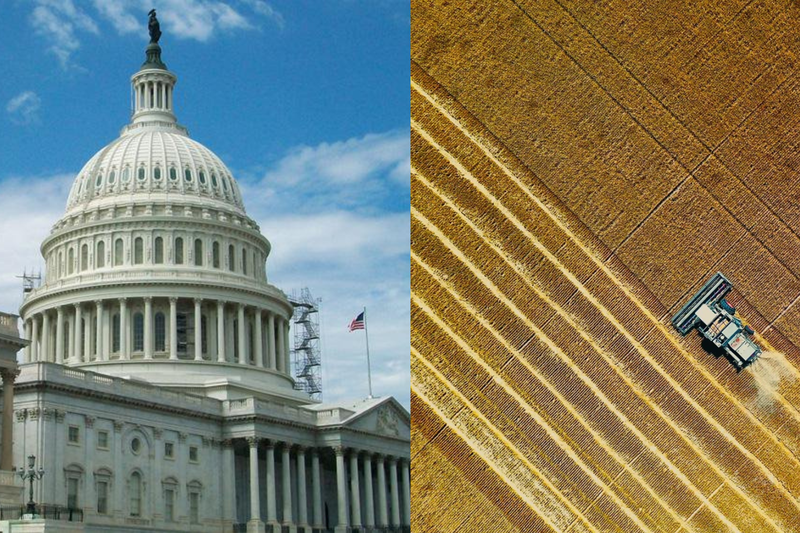
In a tough year for farmers and ranchers, some are worried cuts to the USDA could stall relief funds and Farm Bill efforts. (Photo illustration by Elizabeth Rembert, photos from Flickr, Kansas News Service)
By Macy Byars, Nebraska Public Media
(April 16, 2026)
The Trump administration requested a 19% cut to the U.S. Department of Agriculture earlier this month in its 2027 budget proposal. Some farm and ranch advocates worry these cuts will worsen a tough year for the agriculture industry, and Nebraskans already contending with last year’s federal cuts to the Supplemental Nutrition Assistance Program could face further reductions as Congress finalizes the budget.
The budget seeks a $4.9 billion cut, partially covered by program eliminations. Other agency budget reductions would be necessary to meet the total requested cut.
Nebraska Farmers Union President Jon Hansen said farmers facing low commodity prices, high input costs and natural disasters need USDA staff and funding to help them through this difficult economic time.
“All of the farm and commodity organizations are saying we need an updated and an improved Farm Bill to help us weather the challenges of this ongoing farm crisis that we have because of ever-increasing and record-setting farm input costs and disappearing international markets and low commodity prices and folks being squeezed out of business,” Hansen said.
He worries cuts could curb efforts to provide federal relief.
“And what we need is more positive partnership, and we need more services,” Hansen said. “They're continuing to move forward with their agenda to dismantle and to really do away with, as near as we can tell, the infrastructure that's needed to provide services to farm and ranch families.”
The Trump administration budget calls the USDA a “bloated Washington D.C. bureaucracy” with complicated, expensive management layers and “extraneous programs.” It claims programs on the chopping block are “extraneous” and promote efforts outside the department’s core mission, “such as radical transgender and Green New Scam ideologies.”
State Director Angie Lauritsen of nonprofit federal economic policy coalition Nebraska for Us argues the USDA’s purpose should be to support ag producers, food safety and food security, rather than focusing on ideological issues.
“Those things are a distraction and have nothing to do with providing food to hungry people. And that's where the focus should be,” Lauritsen said.
Lauritsen said Nebraskans rely on the programs the budget seeks to eliminate.
“A lot of [staff] are the people that really service our communities and help them navigate federal grants or help them get those farm loans that are super beneficial to them,” Lauritsen said.
Last year, programs like SNAP and Medicaid were cut in the One Big Beautiful Bill Act. Lauritsen said these cuts are already affecting the pocketbooks of Nebraskans, and further cuts could deepen their financial struggles.
The number of people accessing SNAP benefits in the state has gone down, said Lauritsen. The Center on Budget and Policy Priorities reports that SNAP participation in Nebraska dropped 9.1% between December 2024 and December 2025 – a decrease of nearly 14,000 people.
“This is food for them to be able to put on their table – for elderly veterans and kiddos within those families,” Lauritsen said. “Those cuts are affecting real people, real time, today.”
The One Big Beautiful Bill implemented work requirements to enroll in the program, starting in February 2026 and disallowed most refugees and undocumented immigrants from accessing SNAP benefits. Lauritsen said some immigrants with legal status have also stopped applying, fearing that their immigration status will be jeopardized by attempting to access benefits.
She said staff cuts also affect who is able to access government benefits and programs. The USDA saw sweeping staff cuts – about 27% of total staff – through the “Department of Government Efficiency” initiative. She said relocating Washington D.C. staff to rural areas, as the Trump administration’s budget suggests, could cause some USDA workers to leave their jobs.
“Their hope is that some of these people will quit because they don't want to move to a state that they're not familiar with – and they have no family, no friends, no support systems within those states,” Lauritsen said. “And so a part of it is that people will just leave due to attrition, and they won't be rehiring some of those people.”
One proposed cut would eliminate a program that buys ag commodities from producers to provide food aid to food-insecure children in other countries. Lauritsen said the program has directly benefited farmers, and for some, the principle means more.
“I come from a five-generation farm family, and that's a big reason why a lot of producers get into that – because it's a noble profession,” Lauritsen said. “You're providing food. You're providing to those that really drastically need that food.”
Hansen said Nebraska’s Congressional delegation must “stand firm” and not cut USDA funding.
“Too many times, folks are willing to compromise with half a loaf, and unfortunately, in this case, half a loaf is still an awful lot of bread,” Hansen said.
Steep reduction “will never happen”
Cuts are proposed to many other federal departments – largely to pay for an increase in defense spending. Congress will debate and set the final spending levels.
Lauritsen said she hopes the appropriations process will be as bipartisan, like in past years.
In a statement to Nebraska Public Media News, District 2 Rep. Don Bacon said it’s unlikely Congress will finalize this large cut.
“I do not support the proposed cuts to the USDA budget,” Bacon’s statement reads. "USDA programs funded through annual appropriations are vital for Nebraska’s farmers and ranchers who help feed the world. The President’s proposed 19% reduction to USDA funding will never happen. Congress rejected a similar request last year, turning a proposed 21% cut into a 1.3% increase for FY26.”
Sen. Pete Ricketts echoed Bacon’s message.
“As a former governor, I know that the executive branch makes suggestions on funding. But the purse strings are controlled by the Congress,” Ricketts wrote in a statement. “I will fight to ensure farmers and ranchers have robust funding, especially with low corn prices and after the devastating wildfires."
Rep. Mike Flood, Rep. Adrian Smith and Sen. Deb Fischer stated they were looking forward to working with Congress to create a balanced budget and prioritize investments in farmers and ranchers.